


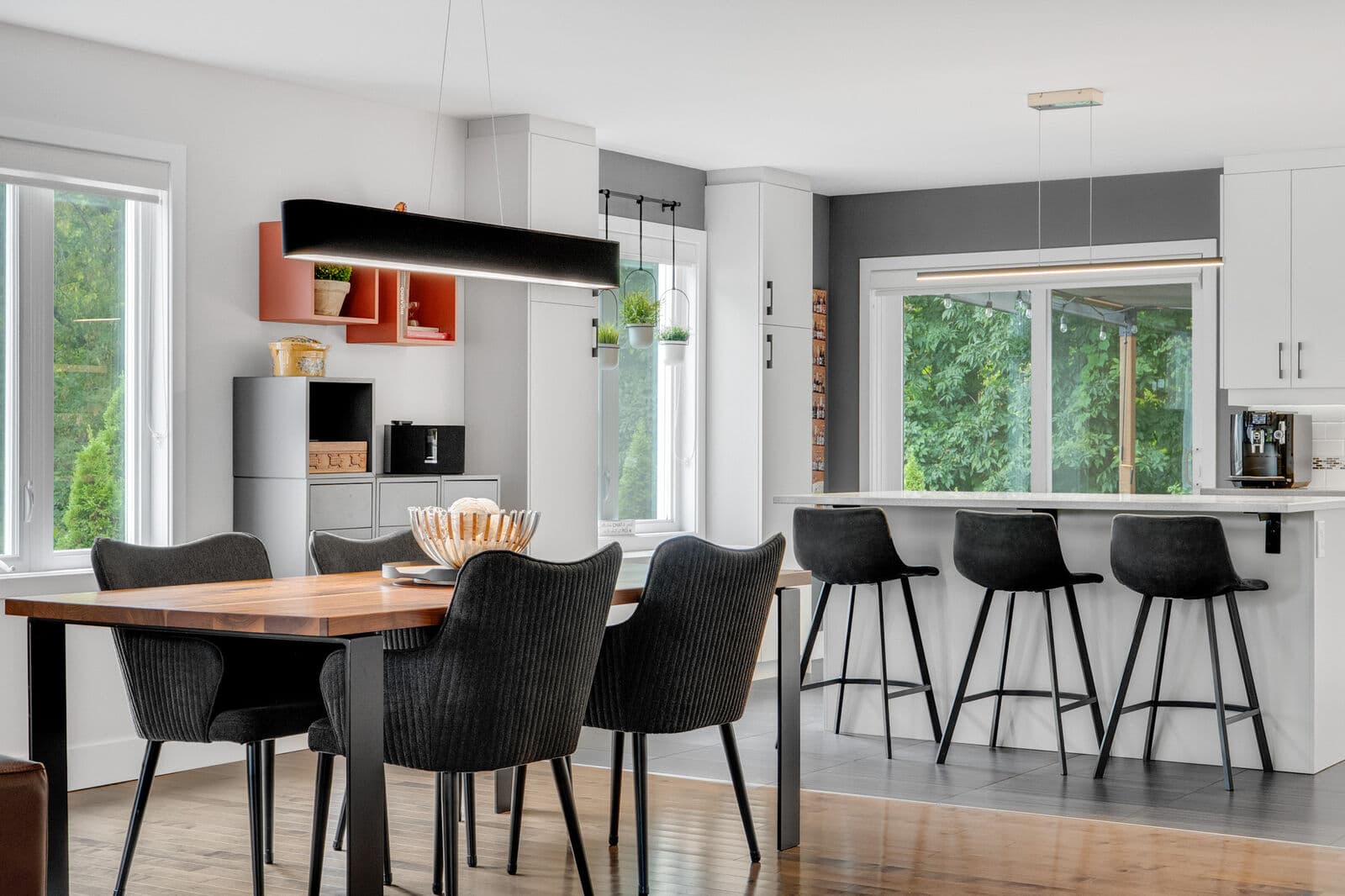
Whether you want to personalize your new space or maximize your property’s resale value, taking on renovations is an exciting adventure that requires careful preparation. According to an IKEA study, more than half of people plan to renovate or move within the next two years.
Here are the key steps to turn your vision into reality while staying on budget.
1. Set your priorities: comfort before aesthetics
Before choosing your countertops, make sure your home’s structure is sound.
- Essential work: Prioritize bringing the electrical up to code, plumbing, thermal insulation and moisture problems.
- Inspection report: Use your pre-purchase inspection report as a priority task list.
- Secondary improvements: Once the building is secure, move on to aesthetic projects (kitchen, bathroom, flooring) that increase the property’s value.
2. Labour: do it yourself or hire out?
Choosing professionals depends on the technical complexity and legal requirements.
- What you can do yourself: Painting, installing mouldings, tiling, or non-structural demolition.
- What requires an expert (RBQ): Electrical, gas and petroleum equipment work must be done by certified professionals.
- Consulting experts: A designer can optimize the space and help avoid costly mistakes, while an engineer is required for any structural change (e.g., removing a load-bearing wall).
3. Budget and return on investment
Return on investment (ROI): Kitchens and bathrooms offer the best return (between 75% and 100% of the value recovered at resale).
Expert tip: Always set aside a 15% buffer for unexpected costs, since nearly 39% of homeowners go over their initial budget.
4. Available grants and financial assistance
Take advantage of government programs to finance your energy-efficient renovations in Québec:
- Rénoclimat: Up to $20,000 for insulation and heating systems.
- LogisVert (Hydro-Québec): Financial assistance for installing efficient heat pumps.
- Canada Greener Homes (Federal): Up to $5,000 for energy renovations.
- RénoRégion: Assistance for low-to-moderate-income households in rural areas (up to $20,000).
5. Legal obligations and insurance
- Municipal permit: A permit is almost always required for an addition, a pool, or replacing doors and windows. Working without a permit can result in fines or a stop-work order.
- Insurance: Notify your insurer before work begins. Some work, such as redoing the roof or bringing the electrical up to code, can even lower your insurance premium.
- Contractor agreement: Always require a detailed quote and a contract that includes the RBQ licence number, GST/QST numbers and proof of civil liability insurance.
6. Typical steps for an interior renovation (kitchen/bathroom)
- Setting the budget and planning the layout.
- Demolition and structural repairs.
- “In-the-wall” work (plumbing, electrical, ventilation).
- Drywall installation and painting.
- Installing cabinets, countertops and finishes.